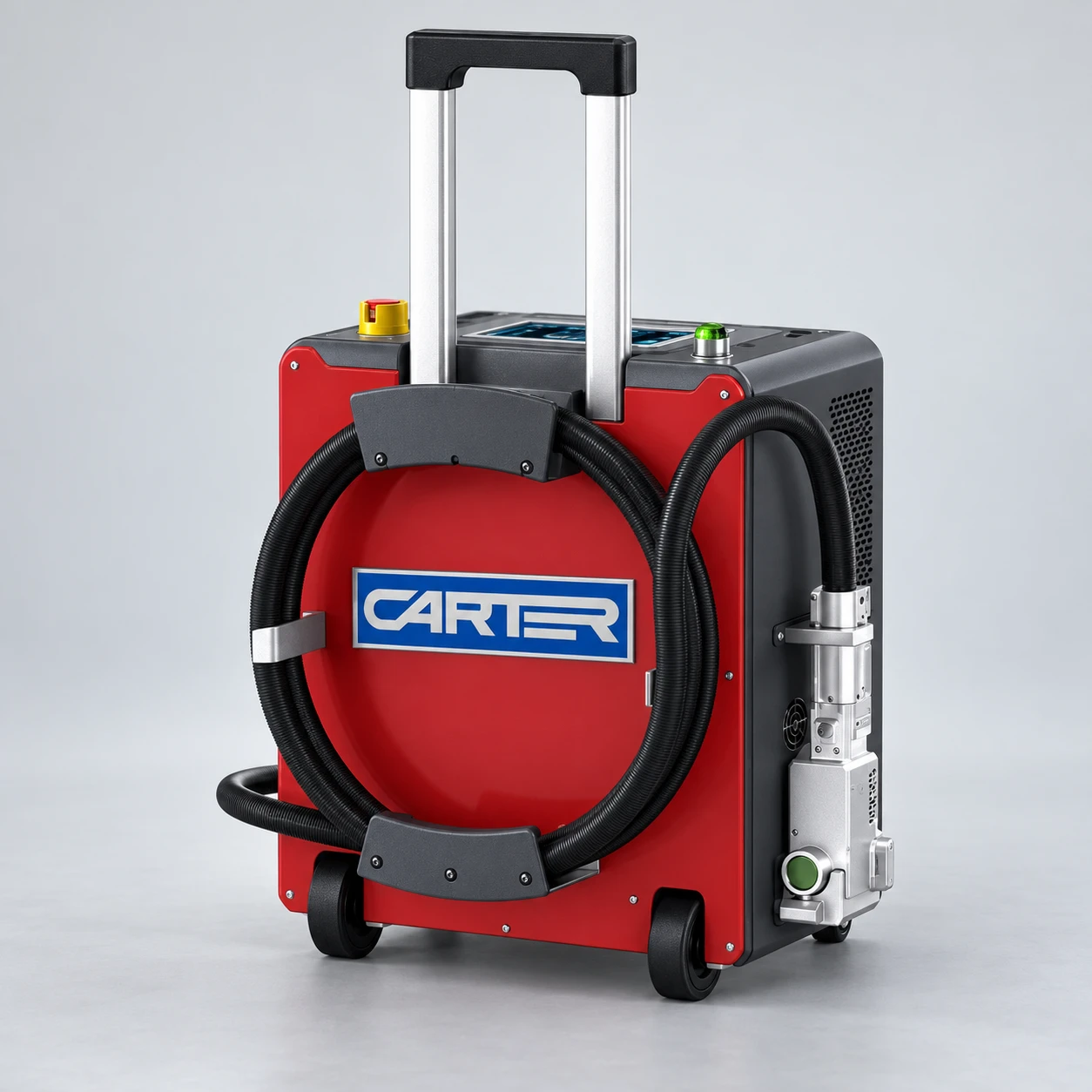
CARTER 200W
Compact air-cooled cleaning
A starting point for selective rust removal, maintenance cleaning and surface preparation on suitable metals.
£13,433.94+ VAT
£16,120.73 including VAT
- Air-cooled
- 5 m fibre delivery cable
- 1064 nm wavelength
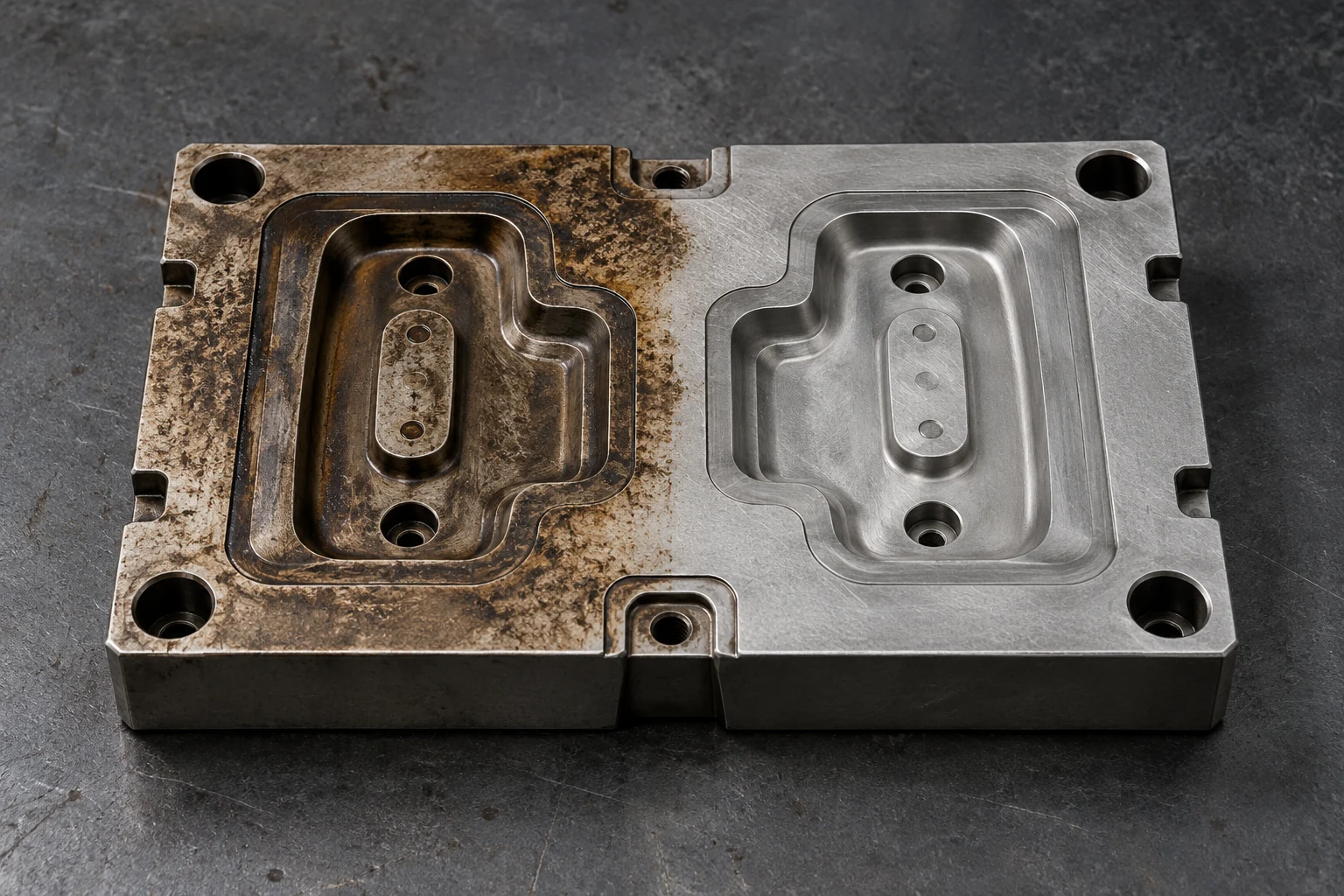
Explore pulsed laser cleaning for rust, paint and surface preparation, plus wood, varnish and graffiti applications subject to a successful material trial. Compare our 200W, 300W and 500W range.

Compact air-cooled cleaning
A starting point for selective rust removal, maintenance cleaning and surface preparation on suitable metals.
£13,433.94+ VAT
£16,120.73 including VAT
More power, still air-cooled
A step up for regular industrial cleaning where a material trial shows that greater output improves the working cycle.
£16,419.26+ VAT
£19,703.11 including VAT
Water-cooled industrial cleaning
The highest-output machine in this range, with integrated water cooling and a longer delivery cable for larger components.
£21,643.57+ VAT
£25,972.28 including VAT
Machine prices exclude VAT, delivery and separately specified extraction, guarding and site works. Final configuration and availability are confirmed by quotation.
| Specification | CARTER 200W | CARTER 300W | CARTER 500W |
|---|---|---|---|
| Laser output | 200 W | 300 W | 500 W |
| Laser type | Pulsed fibre laser | Pulsed fibre laser | Pulsed fibre laser |
| Wavelength | 1064 nm | 1064 nm | 1064 nm |
| Cooling | Air-cooled | Air-cooled | Water-cooled, integrated chiller |
| Fibre delivery cable | 5 m | 5 m | 10 m |
| Pulse width range | 2–500 ns | 80–500 ns | 80–500 ns |
| Pulse frequency range | 1–4000 kHz | 1–1000 kHz | 10–600 kHz |
| Maximum pulse energy | 5 mJ | Confirmed with quotation | 30 mJ |
| Specified AC input | 110–240 V AC, 50/60 Hz | 220 V AC, 50/60 Hz | 220 V AC |
| Machine price, excluding VAT | £13,433.94 | £16,419.26 | £21,643.57 |
Ranges describe available laser parameters; maximum values are not necessarily available together. Complete-machine dimensions, weight, UK supply compatibility, current and protective devices are confirmed before order.
Investigate removal of light rust and contamination from suitable steel parts, tools and machinery components.
Target a specific area of paint or coating where a trial demonstrates the required finish without unacceptable substrate change.
Assess cleaning before welding, coating or bonding against the quality requirements of the downstream process.
Consider deposits on compatible tooling surfaces. Polished finishes, fine details and heat-sensitive areas need sample validation.
Compare 300W and 500W where measured cycle time and access justify more output. Reach and cooling matter alongside power.
Assess removal of selected paints and varnishes from timber, furniture, doors and beams. Confirm the coating can be removed without unacceptable scorching, colour change or loss of detail.
Investigate spray-paint and ink removal from suitable brick, stone and metal. Test for residual staining, surface damage and effects on any original finish.
Send a representative part or clear photographs first. Define what must be removed and what the finished surface must retain.
Pattern, width and overlap influence how energy covers the surface.
Working distance and scan area must match the supplied cleaning head and optics.
Confirm head access, positioning aids and cable reach for the actual workpiece.
Explore wood cleaning, varnish removal, graffiti cleaning, rust removal and more.
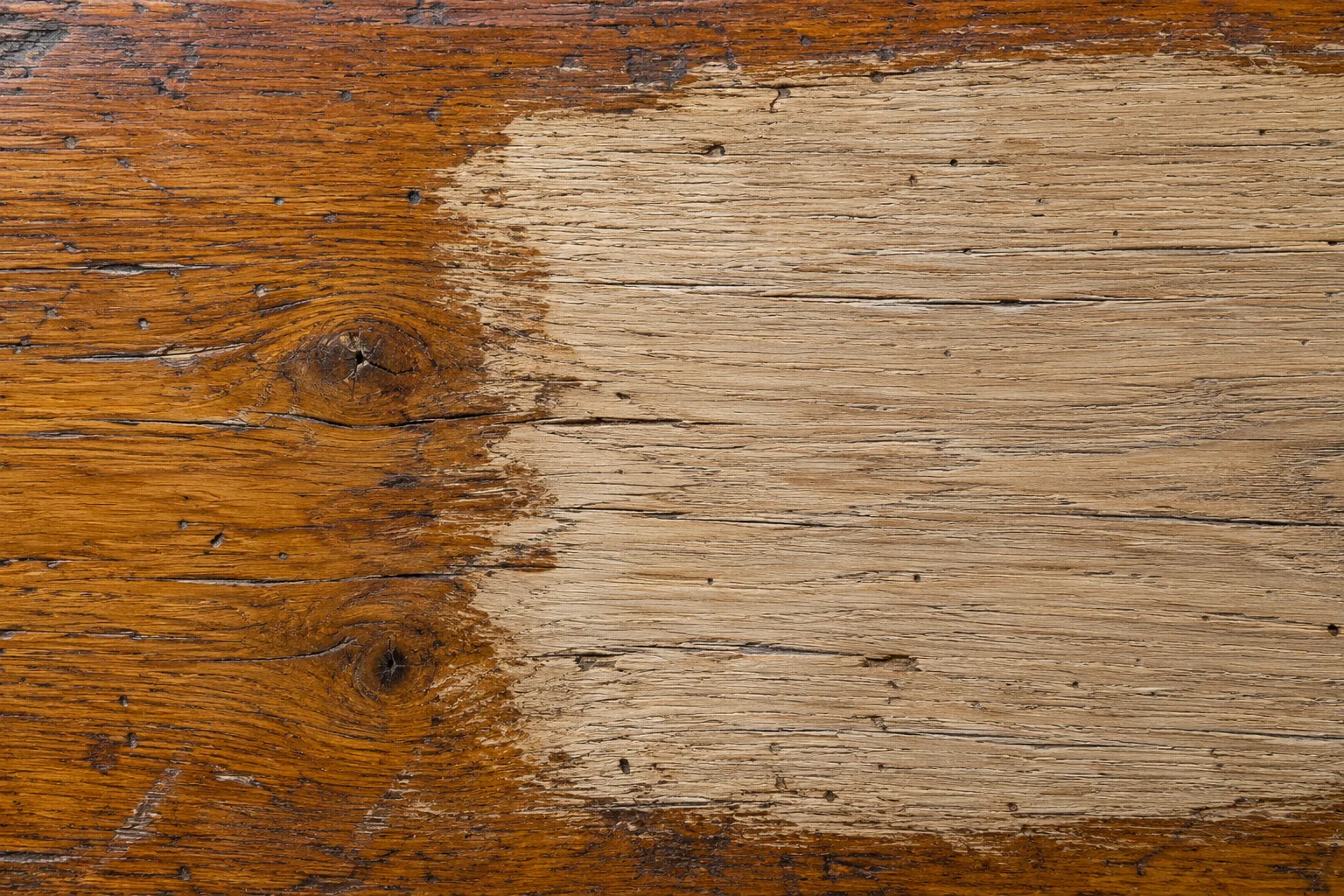
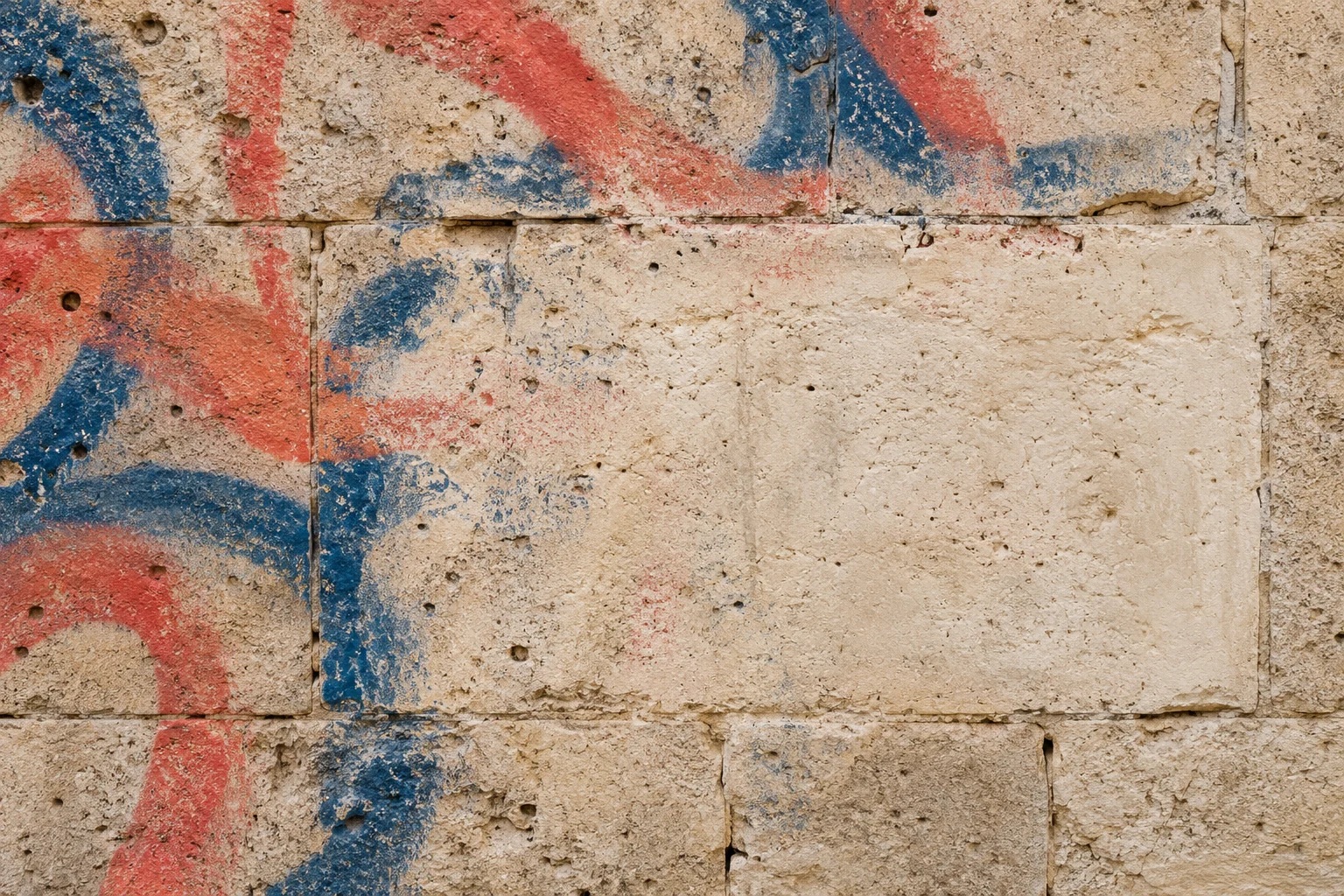
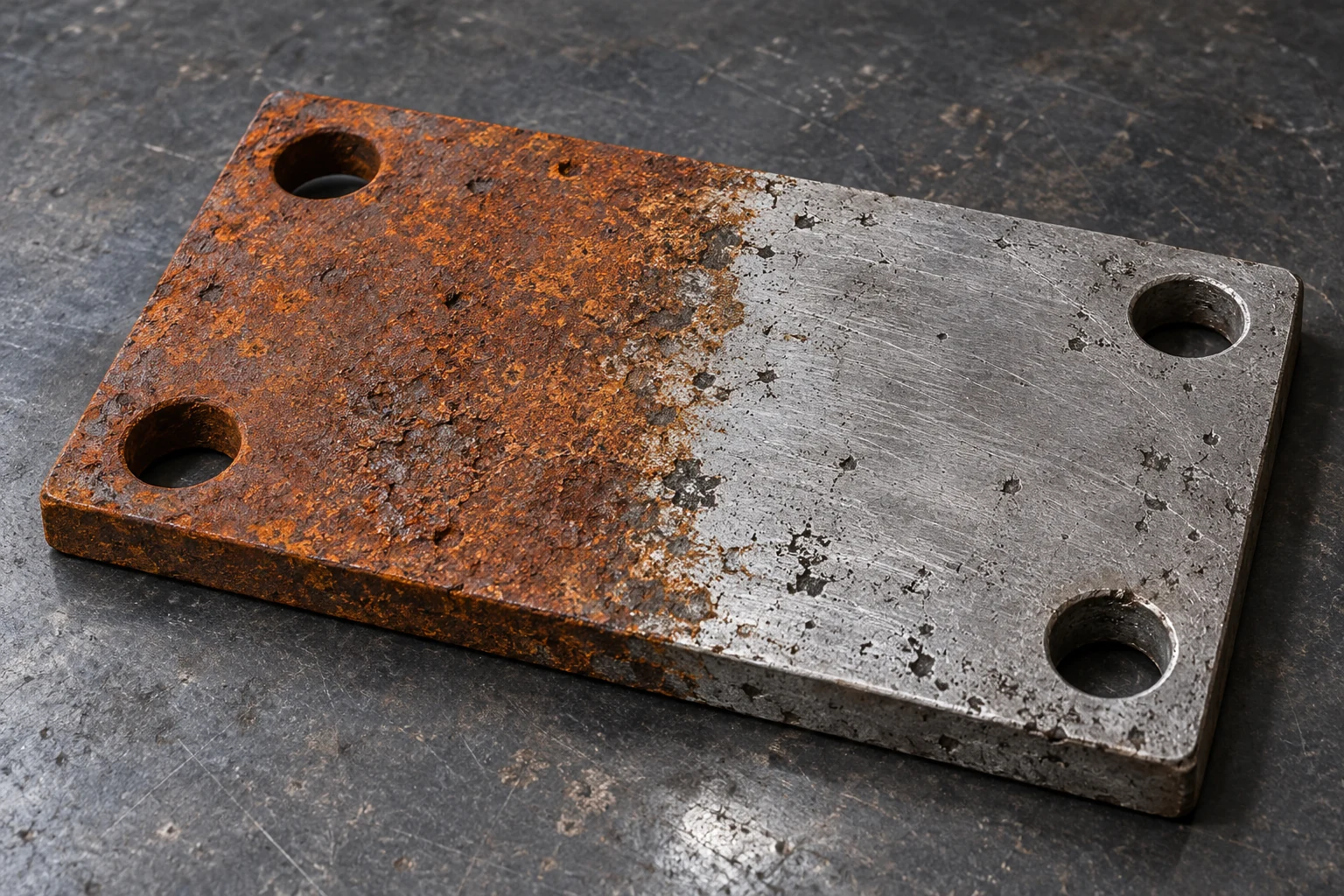
Application illustrations. These are explanatory visuals, not photographs of Carter trials or guaranteed results. Suitability and the finished surface must be established on your material.

Explore removal of selected surface coatings from timber. Grain, wear and penetrating stains remain; a trial must check for scorching, colour change and loss of detail.

Assess spray-paint removal from brickwork. Porous brick and mortar can retain a paint shadow; test the finish and surface condition before treating a larger area.

Explore selective graffiti removal from suitable stone. Natural texture and age remain; fragile stone and historic surfaces need specialist assessment.

Expose the underlying metal on suitable components, brackets and fabrications. Corrosion pits remain: cleaning cannot replace metal that has already been lost.

Prepare a defined area for repair, welding or bonding while retaining coating elsewhere, where trials demonstrate suitable control. Layer thickness and composition affect the result.

Investigate residue removal from accessible features. Check dimensions, surface texture and any protective or release coating before approving the process.
Match the cleaner to the material, finish and daily workload.
Read guide →Carter cleaning guideUnderstand average power, pulse energy and heat input.
Read guide →Carter cleaning guideCompare rust and paint removal, timber restoration, varnish stripping and graffiti cleaning.
Read guide →Carter cleaning guideCompare access, surface profile, waste and job economics.
Read guide →Carter cleaning guidePlan the controlled area, extraction, PPE and training.
Read guide →Carter cleaning guideBuild a realistic budget using measured cycle times.
Read guide →Carter cleaning guideAgree the sample, finish, cycle time and inspection before choosing a laser cleaner.
Read guide →These high-power, invisible near-infrared lasers require a competent laser risk assessment, a suitably controlled or enclosed area and effective fume extraction. Direct and reflected radiation can injure eyes and skin; there is also a fire risk. Protective eyewear alone is not a complete safeguard.
Read the safety and setup guideA focused laser scans the surface and removes an unwanted layer by ablation. Suitable applications include rust, selected coatings and surface contamination. Results depend on the material, coating, optics and process settings.
It can if the process is unsuitable or poorly set. A representative trial must establish settings and acceptance criteria for surface texture, colour, temperature and dimensional limits. Delicate or thin parts need particular care.
No single machine or setting suits every coating. Thick scale, layered paint, reflective parts and complex geometry can require different equipment or preparation. Identify the coating and its hazards before a trial.
Yes, selected paints and varnishes can be removed from suitable timber with an appropriate pulsed laser process. A sample trial must confirm the finish and check for scorching or colour change. Penetrating stains may remain; suitability is confirmed for the material and machine configuration.
Yes, selected spray paints and inks can be removed from suitable brick, stone and metal. Porous surfaces may retain staining, and existing coatings can be affected. Test the exact surface and agree the acceptable result before choosing the machine.
Yes. Removed material becomes particles, fume and debris. A suitable extraction and filtration system is part of the job assessment; the process must not be treated as dust-free or harmless.
No. Compare the actual output mode, pulse energy, pulse duration, beam delivery and demonstrated finish. A larger wattage on a continuous-wave welding system does not establish better cleaning performance.
Only if a competent assessment establishes a controlled area, containment of hazardous radiation, suitable fume controls, electrical protection and environmental suitability. Outdoor use does not remove the need for controls.
Availability, lead time, UK electrical configuration and the complete delivery package are confirmed in your written quotation. Please contact Carter before planning a production start date.
New Carter machines carry our 24-month parts-and-labour warranty and lifetime technical support. Your quotation sets out delivery, commissioning, operator familiarisation and any additional application or safety training.
Send the material, coating or contamination, approximate area, photographs and required finish. Carter will help narrow down the machine and the complete installation package.
Find hydraulic filters, oils, cutting fluid, linisher belts, laser supplies and machine-specific replacement parts.