Electromagnetic clamping
A magnetic bed holds a removable steel clamp bar over the sheet. Lift the folding beam to make the bend. The open clamping arrangement gives access for deep boxes, channels and enclosed shapes.
Carter Magnetic Bending


Pneumatic version shown
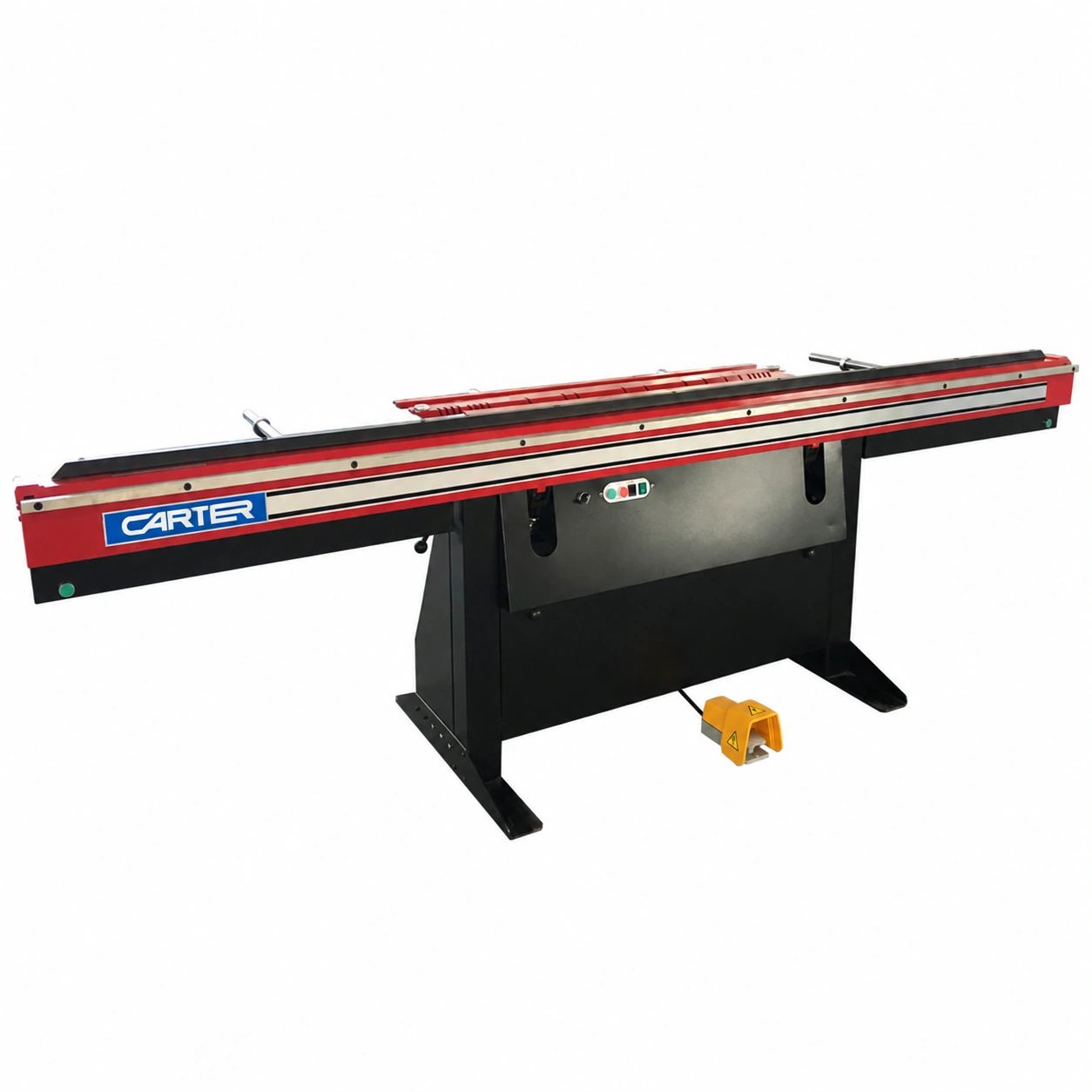
Electrical ratings, weight and equipment can differ on pneumatic versions. Confirm the final specification in your quotation.
| Model | Folding length | Mild steel | Clamping force | Rated current | Weight | Enquire |
|---|---|---|---|---|---|---|
| Carter Magnetic Bending 0.625 | 625 mm | 1.6 mm | 3 t | 4 A | 72 kg | Request a quotation |
| Carter Magnetic Bending 1.0 | 1000 mm | 1.6 mm | 4.5 t | 6 A | 110 kg | Request a quotation |
| Carter Magnetic Bending 1.25 | 1250 mm | 1.6 mm | 6 t | 8 A | 150 kg | Request a quotation |
| Carter Magnetic Bending 2.0 | 2000 mm | 1.6 mm | 9 t | 12 A | 270 kg | Request a quotation |
| Carter Magnetic Bending 2.5 | 2500 mm | 1.6 mm | 12 t | 16 A | 315 kg | Request a quotation |
| Carter Magnetic Bending 3.2 | 3200 mm | 1.2 mm | 12 t | 16 A | 380 kg | Request a quotation |
A magnetic bed holds a removable steel clamp bar over the sheet. Lift the folding beam to make the bend. The open clamping arrangement gives access for deep boxes, channels and enclosed shapes.
For HVAC ductwork, trays, cabinets, roofing flashings and general sheet metal fabrication. Mild steel, aluminium, copper and stainless steel capacities depend on material, thickness and working width.
Tooling options include full-length, slotted, segmented and thin clamp bars, an adjustable back stop, angle stop and storage tray. CARTER will confirm the tooling supplied with your chosen model.
Manual-fold and pneumatic-assisted versions are listed. Electrical clamping needs a power supply even on manual-fold models. Pneumatic versions also need compressed air. Confirm voltage, current, air pressure and equipment before ordering.
Send your material grade, thickness, longest bend and a drawing showing flange sizes and returns. We will confirm the model, capacity, tooling, delivery and price. Prices on application.
Segmented clamp bars give clearance for folding the remaining sides of boxes. A slotted bar can speed up suitable shallow trays.
Make U-channels, top-hat profiles and reverse bends where access around a conventional upper beam can be restrictive.
Folded lips and rolled-edge work are described in the operating manual. Tooling, material thickness and clearance determine what can be formed.
Suitable work includes duct fittings, sheet-metal housings, trays, flashings and brackets. Send a drawing to check the bend sequence and tooling before choosing a machine.
The manual reference specifies 220/240 V AC single-phase power, 180° bending-beam travel, a 30% magnetic duty cycle and a 70°C thermal cut-out. Beam travel is not a guaranteed bend angle for every part.
The magnet is designed for intermittent use. Keep the magnetic contact surfaces clean and follow the operating manual for cooling periods and safe clamping.
The electromagnet pulls down the steel clamp bar, trapping the sheet beneath it. This allows suitable aluminium, copper and stainless steel sheet to be formed as well as mild steel.
Examples below are manual-reference figures for the 1.6 mm models, with the extension bar fitted. They are not capacities for the 3.2 model. Alloy, strength, bend length and tooling affect the result.
| Material | Thickness | Minimum flange | Typical bend radius |
|---|---|---|---|
| Mild steel · 250/320 MPa | 1.6 mm | 30 mm | 3.5 mm |
| Aluminium · 5005 H34 | 1.6 mm | 30 mm | 1.8 mm |
| Stainless steel · 304/316 | 1.0 mm | 30 mm | 3.5 mm |
Thicker or shorter flanges need an application check. Do not treat the mild-steel rating as a stainless-steel rating.