Cutting requirement
Give the longest sheet and the maximum mild-steel thickness. Tell us whether the work is stainless, aluminium, galvanised or another material.
Cutting length and thickness are the starting point. Blade gap, backgauge repeatability, front support, rear thin-gauge handling and unloading can matter just as much in daily production.
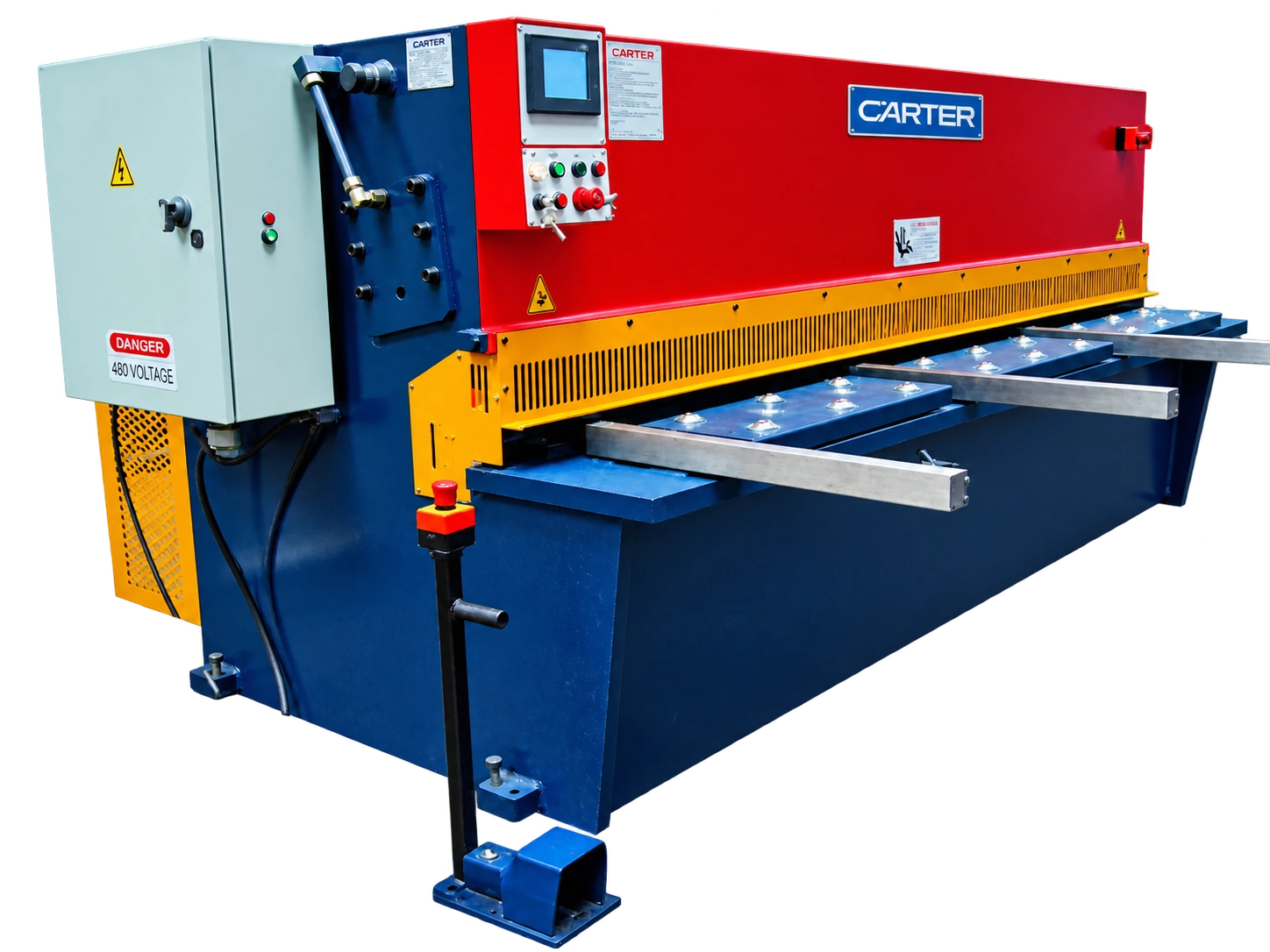
Give the longest sheet and the maximum mild-steel thickness. Tell us whether the work is stainless, aluminium, galvanised or another material.
Confirm whether the operator needs programmable cut lengths, powered backgauge, blade-gap adjustment and a digital touchscreen controller.
Discuss squaring arms, ball-transfer bed infill, front supports, rear thin-gauge sheet support and the offcut/finished-sheet route.
| Featured machine | 3200 × 6.5 mm CNC hydraulic guillotine at £18,160 + VAT (£21,792.00 including VAT) and delivery in the current range. |
|---|---|
| Range | 2000, 2500, 3200 and 4000 mm cutting lengths across 4, 6, 8, 10, 12, 16 and 20 mm listed capacities where available. |
| Standard equipment | Programmable CNC touchscreen, powered backgauge, squaring/support arms, ball transfers, shadow-line lighting and adjustable blade gap/cutting length. |
| Blade system | D2 hardened multi-edge blades; confirm the fitted blade arrangement and spare-blade requirements for the selected model. |
| Delivery | Confirm unloading, access, electrical supply, commissioning, training and warranty before the production slot is booked. |
The demonstration includes a machine-led rear-support sequence showing the support arms, backstop, clamping/cutting cycle and return movement. It is a visual explanation of the supplied machine arrangement; the final sequence and guarding are confirmed with the selected model.
Use the material grade, actual thickness and longest cut to assess the job. A thickness rating for one material does not automatically apply to stainless steel, aluminium or high-strength sheet.
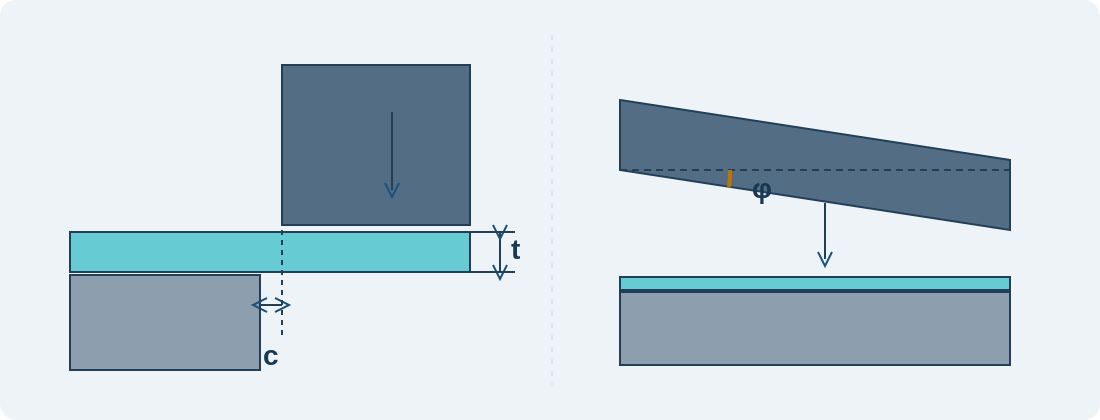
For a simplified simultaneous cut with parallel blades, estimated force equals cut length multiplied by thickness and material shear strength. Use shear strength, not tensile strength, and keep the units consistent. This excludes friction, blade wear and machine losses.
F ≈ L × t × τ
Force in N; cut length and thickness in mm; shear strength in N/mm². Divide N by 1000 to obtain kN.
Worked example only: length 1000 mm, thickness 2 mm and assumed shear strength 300 N/mm² give 600000 N, or 600 kN. This is not a capacity calculation for a raked guillotine.
A raked upper blade engages the sheet progressively. The length cutting at one instant differs from the full sheet width. Rake, material penetration and machine geometry influence force and distortion. Do not change the machine rake or extrapolate a thickness capacity from this simple parallel-blade formula.
Clearance is the gap between the passing cutting edges, not the blade rake. Too little or too much clearance can reduce edge quality and increase cutting demand. Use the selected machine manual and material guidance; a universal percentage cannot approve every setup.
A sheared edge normally has rollover, a smoother sheared zone, a fracture zone and an exit burr. Excessive burrs may indicate blade wear or unsuitable clearance. Narrow strips may distort because of rake, support and residual stresses. Inspect both the retained sheet and offcut before accepting a setting.
Backgauge positioning alone does not guarantee finished cut size. Squareness, sheet flatness, contact with the stops, hold-downs and support all matter. Rear sheet support can help thin sheet remain presented to the stops; confirm the system, size limits and cycle on the selected model.
Use a representative sample within the machine rating. Record material, measured thickness, cut length, strip width, permitted machine settings and blade condition. Inspect size, squareness, burrs, bow and twist. Blade inspection or adjustment must follow the machine isolation and maintenance procedure.