Press brake crowning explained
Crowning compensates for machine deflection under bending load. It helps keep the angle consistent along a long bend.
Why the middle of a bend can differ
The ram and bed can deflect under load. The punch then penetrates the die unevenly along the bend, so the centre can finish more open than the ends. Adjustable crowning introduces a compensating curve. The required compensation depends on the machine and the bending job.
Mechanical and hydraulic crowning
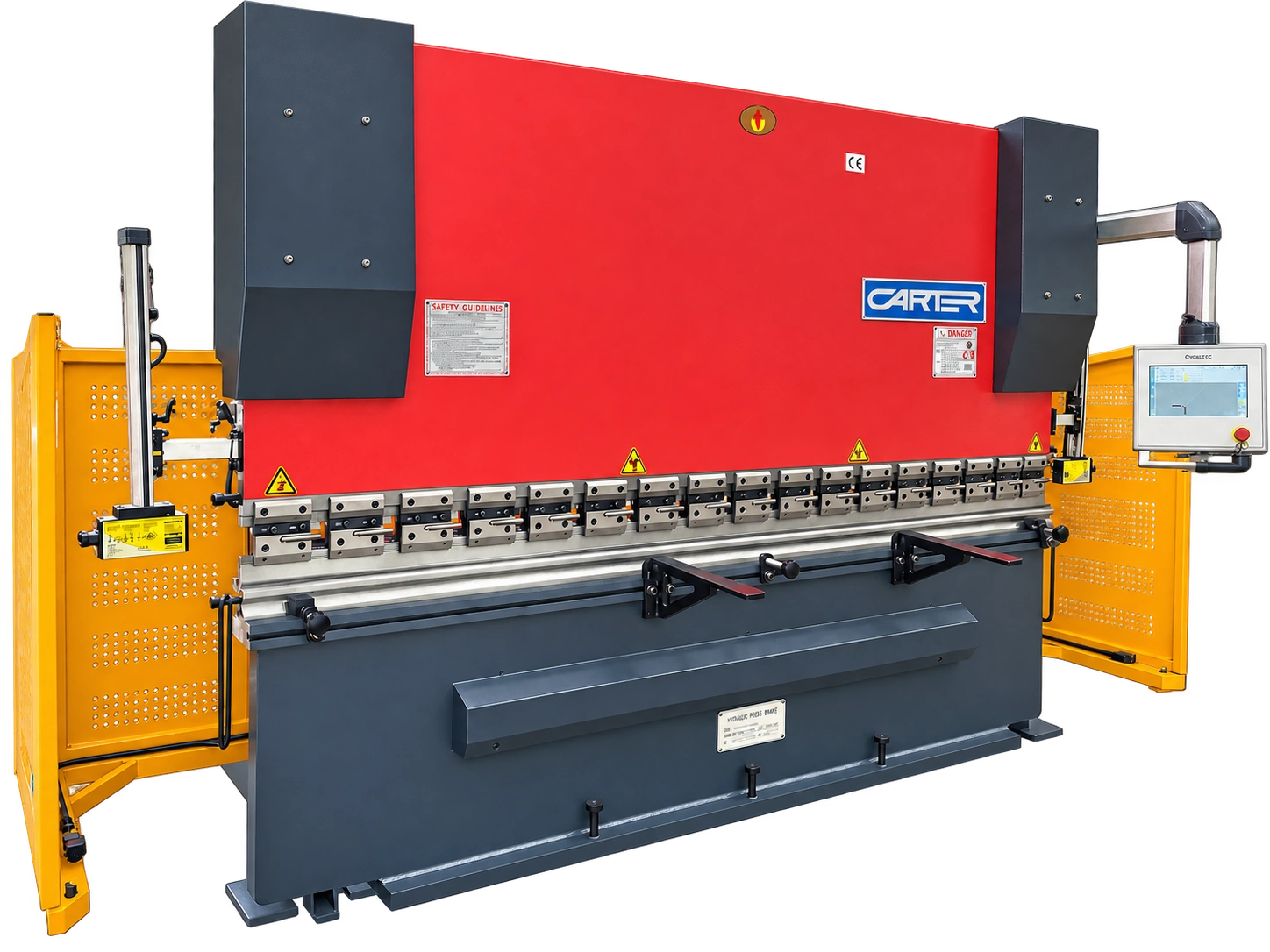
Mechanical systems use an adjustable wedge arrangement; hydraulic systems use cylinders. The system must suit the machine. CARTER ADS is mechanical crowning. P controls pressure/tonnage; it is not another backgauge movement.
Crowning or another cause?
A difference between the centre and ends can indicate deflection, but tooling alignment, seating, wear and material variation also need checking. If the angle is consistently wrong along the whole part, crowning alone is unlikely to solve it. Use the machine instructions and a qualified operator to assess the cause.
What to send with an enquiry
Send the material grade, thickness, bend length, V opening and target angle. Record the measured angles at the left, centre and right, and include the machine details and a part drawing. This helps Carter discuss the correct machine or support requirement.
Frequently asked questions
Does crowning increase machine capacity?
No. Crowning compensates for deflection; it does not increase the permitted load of the machine, punch, die or clamping system.
Is crowning the same as springback compensation?
No. Crowning addresses variation along the bend caused by machine deflection. Springback is the material relaxing after the load is removed.
Discuss your next bending job
Send the material, thickness, working length and a drawing with your enquiry.