Manual vs hydraulic box & pan folders
A folder must suit the box geometry as well as the sheet thickness. Compare the longest bend, material grade, return flanges and daily workload before choosing how it is powered.
Which type suits the work?
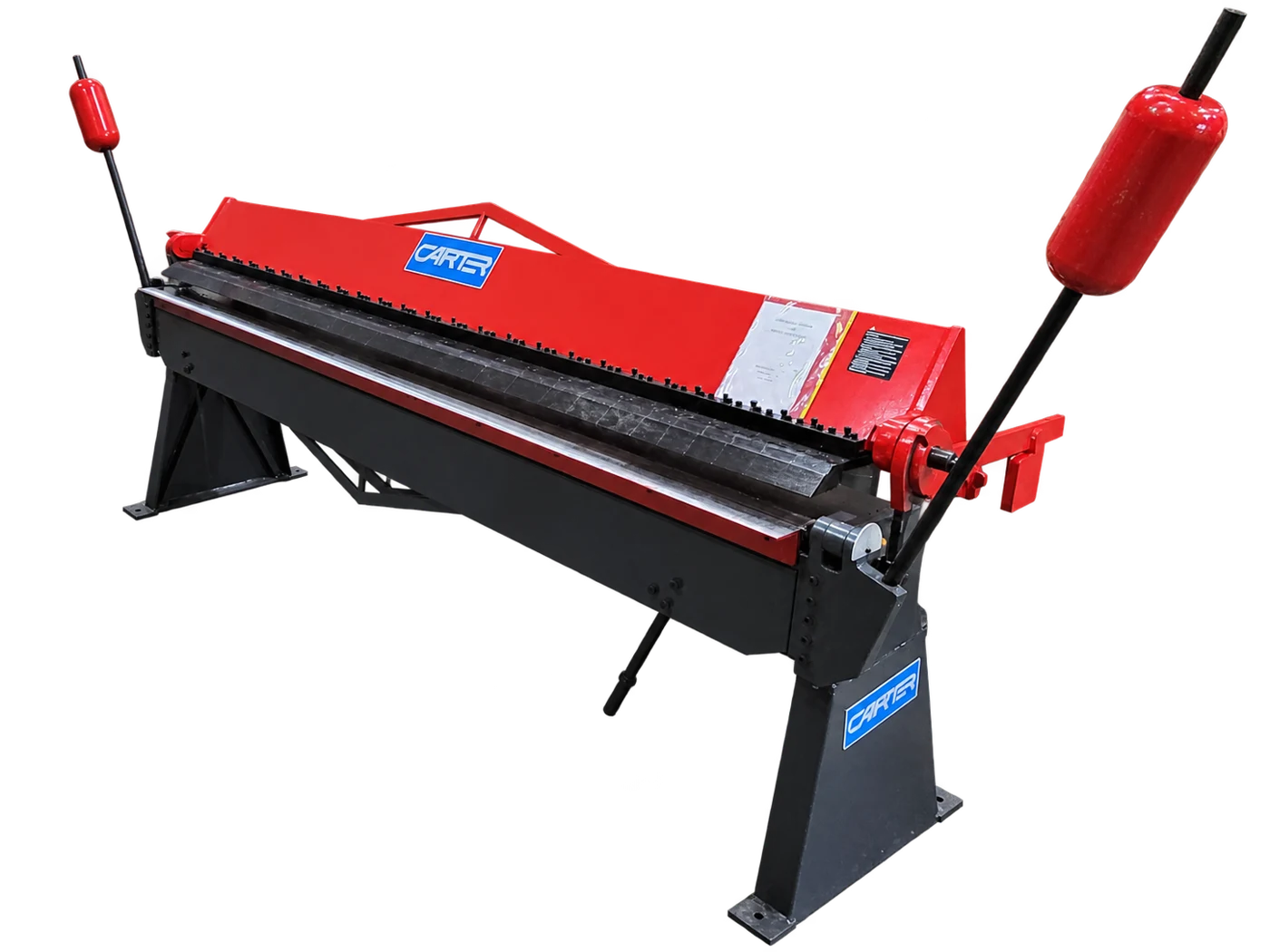
| Manual folders | A practical option for occasional work and smaller batches within the machine’s capacity. Consider operator effort, sheet weight and the number of bends per component. |
|---|---|
| Hydraulic folders | Powered clamping and bending can reduce manual effort on repeated work. Confirm the controls and sequence functions of the selected model; hydraulic does not automatically mean CNC. |
| Capacity and material | Use the rating for the actual material and working length. Do not apply a mild-steel thickness rating directly to stainless steel or assume spare capacity permits an overloaded short bend. |
Check the finished box
| Fingers and clearance | Check segment widths, clamping height, throat clearance, return flanges and the order of bends. Send a drawing of the finished box, not only the flat blank. |
|---|---|
| Power and access | Manual folders need no electrical supply. Powered machines require 415V three-phase unless the selected model states otherwise. Confirm footprint, access and sheet-handling space. |
| Compare a batch | Assess setup, clamping, bending, repositioning and handling together. Ask for a quotation covering the machine, backgauge, delivery and agreed training. |
Next step
Request a quotation
Send the material, thickness, working length and a drawing with your enquiry.
Request help choosing